No Action
Action Taken
Significant Progress
Stalled

Evidence-based. Data-driven. For the people.
Oath: March 27, 2026
Forest technicians confront Minister Devkaran Kalwar over delayed governance reforms in Lumbini Province
Forest technicians from across Lumbini Province's 12 districts directly confronted Forest and Environment Minister Devkaran Kalwar and Forest Secretary Pramod Bhattarai about the government's reluctance to implement governance reforms in forest administration. Nepal Forest Technician Association Lumbini Chairman Keshav Khadka highlighted stalled policies including e-tender procedures for timber auctions, standing tree auction laws, and private forest sal species cutting regulations that remain trapped in the cabinet. The confrontation reveals growing frustration among field-level government employees who say they lack proper working environment due to policy paralysis at the ministerial level. Minister Kalwar promised immediate priority action on forest administration reforms, digital auction transparency, and removing policy obstacles.
National dialogue calls for inclusive climate justice ensuring equal participation of persons with disabilities
A national dialogue held on Monday in Kathmandu emphasized the need for inclusive approaches in climate justice to ensure equal participation of persons with disabilities in climate policies and implementation. The event, organized by Swiss Disability and Development Consortium with participation from CBM Global, FairMed, HI, and IDA, brought together around 100 representatives from government agencies, development partners, civil society, and disability rights groups. The dialogue highlighted that persons with disabilities face greater risks during floods, landslides, heat waves, and droughts, yet their voices are often excluded from policy-making processes. Participants called for stronger policies, accessible relief centers, climate finance access, and community-level implementation to ensure no one is left behind in climate action.
Eight community schools in Kathmandu Valley demonstrate excellence in education quality and results
Eight community schools across Kathmandu Valley including Bishwa Niketan in Tripureshwor, Tarun in Balaju, Gyanodaya in Bafal, and Tripadma Vidyashram in Lalitpur have achieved exceptional academic results and quality education delivery. These schools serve over 15,000 students combined, with Bishwa Niketan alone having 4,000 students and achieving 100% pass rates, while Tarun Secondary School has won national recognition four times since its 2030 BS establishment. The success of these institutions proves that quality education is possible in government schools, challenging social prejudices against public education and attracting students from private schools. This demonstrates progress in Nepal's public education system, though systematic government investment and policy reforms remain needed for nationwide improvement.
Over 4,000 rural households in Jumla and Kalikot receive improved iron stoves to reduce indoor air pollution and health risks
Sahaas Nepal distributed improved iron stoves to 4,200 households across Tila and Hima rural municipalities in Jumla, and Mahabai rural municipality and Tilagufa municipality in Kalikot under a climate protection project. The initiative aims to make these areas smoke-free by 2029, with 90% funding from Sahaas Nepal and 10% from local governments or communities. Rural women like Jaipura Sarki from Tila-1 and Batulli Rawat from Tila-2 report significant improvements in respiratory health, reduced eye irritation, and cleaner kitchens since switching from traditional mud stoves. The project addresses critical health challenges while promoting forest conservation through reduced firewood consumption and decreased daily labor for women collecting fuel.
Cabinet recommends multiple ordinances to President to end political appointments and establish cooperative relief fund
Prime Minister Balendra Shah's Cabinet on Vaisakha 14, 2083 recommended several ordinances to the President targeting transparent public appointments and cooperative sector reforms. The package includes amendments to Constitutional Council procedures, establishment of 'Chakraya Relief Fund' for cooperative depositors, removal of politically appointed officials, and modernization of public procurement processes. These reforms directly address citizen concerns about corruption in public institutions and recovery of savings trapped in problematic cooperatives. The ordinances await presidential approval before implementation can begin.
Prime Minister Balendra Shah declines meeting with Trump's special envoy Sergio Gor during Nepal visit
Prime Minister Balendra Shah has refused to meet with Sergio Gor, US President Donald Trump's special envoy for South and Central Asia, who arrived in Kathmandu on Thursday evening seeking diplomatic engagement. Gor, who also serves as US ambassador to India, had requested meetings for Friday or Saturday through multiple channels, but Shah maintains his policy of meeting only ministers or higher-level officials from foreign countries. Instead, Gor will meet with Finance Minister Swarnim Wagle, Foreign Minister Shisir Khanal, and Foreign Secretary Amrit Bahadur Rai, similar to how US Assistant Secretary of State Samir Paul Kapur was handled on April 20. This diplomatic stance represents a significant shift in Nepal's traditional approach to foreign diplomatic visits and could impact future US-Nepal economic cooperation discussions.
Chet Narayan Acharya launches construction of 40-kilometer Dhankhola-Lamahi highway section under US-Nepal partnership
Lumbini Province Chief Minister Chet Narayan Acharya formally initiated construction work on the 40-kilometer Dhankhola-Lamahi road section of the East-West Highway on Wednesday under the Millennium Challenge Corporation Nepal Compact. The $208 million project will employ advanced technologies including Full Depth Reclamation and Superpave asphalt, expanding the road to 12 meters total width with completion scheduled within 24 months by Sharma-Kumar Joint Venture. This infrastructure development represents part of a larger $747 million US-Nepal investment program aimed at reducing transport costs and improving connectivity for local businesses and agricultural sectors. The project demonstrates tangible progress on Nepal's commitment to complete national infrastructure projects within specified timeframes.
Romania proposes stricter regulations requiring 75,000 euro deposit for companies bringing 250 foreign workers
Romania's draft labor legislation includes provisions requiring supply companies to deposit 75,000 euros when bringing in 250 foreign workers. This regulatory change will directly impact Nepali workers seeking employment opportunities in Romania, as it may increase costs for recruitment agencies and potentially limit job placements. The measure represents Romania's effort to strengthen oversight of foreign labor supply chains and protect migrant worker rights through financial guarantees. Nepali workers and recruitment agencies should monitor how this policy develops as it could affect future employment opportunities and recruitment costs.
Forest officers in Banke report increased rescue operations as venomous snakes enter residential areas amid rising temperatures
Senior Division Forest Officer Shankar Prasad Gupta reported that venomous snakes including Russell's viper, gaboon, and kraits have been appearing more frequently in Banke district due to extreme heat, with at least one snake rescued daily from settlements. Forest guard Thir Bahadur Thapa leads a specialized rescue team that has saved 140 snakes during the current fiscal year, releasing them back into jungle areas after removal from residential properties. This seasonal wildlife management challenge affects public safety as dangerous species seek cooler areas near human habitation during peak summer temperatures. The increased snake activity compared to previous years indicates ongoing environmental pressures that require sustained government forest department response to protect both wildlife and communities.
National Statistics Office reveals alarming child mortality and malnutrition rates in Madhesh Province exceed national averages
The National Statistics Office published provincial results of the Nepal Multidimensional Survey 2024/25 in Janakpur, revealing critical health and education challenges in Madhesh Province. The data shows neonatal mortality at 20 per thousand live births and under-five mortality at 33 per thousand, with 23.2 percent of children underweight and 31.1 percent stunted, while education access remains limited with 22.6 percent of grades 9-12 students out of school. These statistics highlight urgent gaps in basic health services and nutrition programs that directly impact thousands of families across the province. The government must address these disparities through targeted healthcare investments and improved service delivery to meet its commitment to ensuring minimum health standards nationwide.
Forest technicians confront Minister Devkaran Kalwar over delayed governance reforms in Lumbini Province
Forest technicians from across Lumbini Province's 12 districts directly confronted Forest and Environment Minister Devkaran Kalwar and Forest Secretary Pramod Bhattarai about the government's reluctance to implement governance reforms in forest administration. Nepal Forest Technician Association Lumbini Chairman Keshav Khadka highlighted stalled policies including e-tender procedures for timber auctions, standing tree auction laws, and private forest sal species cutting regulations that remain trapped in the cabinet. The confrontation reveals growing frustration among field-level government employees who say they lack proper working environment due to policy paralysis at the ministerial level. Minister Kalwar promised immediate priority action on forest administration reforms, digital auction transparency, and removing policy obstacles.
National dialogue calls for inclusive climate justice ensuring equal participation of persons with disabilities
A national dialogue held on Monday in Kathmandu emphasized the need for inclusive approaches in climate justice to ensure equal participation of persons with disabilities in climate policies and implementation. The event, organized by Swiss Disability and Development Consortium with participation from CBM Global, FairMed, HI, and IDA, brought together around 100 representatives from government agencies, development partners, civil society, and disability rights groups. The dialogue highlighted that persons with disabilities face greater risks during floods, landslides, heat waves, and droughts, yet their voices are often excluded from policy-making processes. Participants called for stronger policies, accessible relief centers, climate finance access, and community-level implementation to ensure no one is left behind in climate action.
Eight community schools in Kathmandu Valley demonstrate excellence in education quality and results
Eight community schools across Kathmandu Valley including Bishwa Niketan in Tripureshwor, Tarun in Balaju, Gyanodaya in Bafal, and Tripadma Vidyashram in Lalitpur have achieved exceptional academic results and quality education delivery. These schools serve over 15,000 students combined, with Bishwa Niketan alone having 4,000 students and achieving 100% pass rates, while Tarun Secondary School has won national recognition four times since its 2030 BS establishment. The success of these institutions proves that quality education is possible in government schools, challenging social prejudices against public education and attracting students from private schools. This demonstrates progress in Nepal's public education system, though systematic government investment and policy reforms remain needed for nationwide improvement.
Over 4,000 rural households in Jumla and Kalikot receive improved iron stoves to reduce indoor air pollution and health risks
Sahaas Nepal distributed improved iron stoves to 4,200 households across Tila and Hima rural municipalities in Jumla, and Mahabai rural municipality and Tilagufa municipality in Kalikot under a climate protection project. The initiative aims to make these areas smoke-free by 2029, with 90% funding from Sahaas Nepal and 10% from local governments or communities. Rural women like Jaipura Sarki from Tila-1 and Batulli Rawat from Tila-2 report significant improvements in respiratory health, reduced eye irritation, and cleaner kitchens since switching from traditional mud stoves. The project addresses critical health challenges while promoting forest conservation through reduced firewood consumption and decreased daily labor for women collecting fuel.
Cabinet recommends multiple ordinances to President to end political appointments and establish cooperative relief fund
Prime Minister Balendra Shah's Cabinet on Vaisakha 14, 2083 recommended several ordinances to the President targeting transparent public appointments and cooperative sector reforms. The package includes amendments to Constitutional Council procedures, establishment of 'Chakraya Relief Fund' for cooperative depositors, removal of politically appointed officials, and modernization of public procurement processes. These reforms directly address citizen concerns about corruption in public institutions and recovery of savings trapped in problematic cooperatives. The ordinances await presidential approval before implementation can begin.
Prime Minister Balendra Shah declines meeting with Trump's special envoy Sergio Gor during Nepal visit
Prime Minister Balendra Shah has refused to meet with Sergio Gor, US President Donald Trump's special envoy for South and Central Asia, who arrived in Kathmandu on Thursday evening seeking diplomatic engagement. Gor, who also serves as US ambassador to India, had requested meetings for Friday or Saturday through multiple channels, but Shah maintains his policy of meeting only ministers or higher-level officials from foreign countries. Instead, Gor will meet with Finance Minister Swarnim Wagle, Foreign Minister Shisir Khanal, and Foreign Secretary Amrit Bahadur Rai, similar to how US Assistant Secretary of State Samir Paul Kapur was handled on April 20. This diplomatic stance represents a significant shift in Nepal's traditional approach to foreign diplomatic visits and could impact future US-Nepal economic cooperation discussions.
Chet Narayan Acharya launches construction of 40-kilometer Dhankhola-Lamahi highway section under US-Nepal partnership
Lumbini Province Chief Minister Chet Narayan Acharya formally initiated construction work on the 40-kilometer Dhankhola-Lamahi road section of the East-West Highway on Wednesday under the Millennium Challenge Corporation Nepal Compact. The $208 million project will employ advanced technologies including Full Depth Reclamation and Superpave asphalt, expanding the road to 12 meters total width with completion scheduled within 24 months by Sharma-Kumar Joint Venture. This infrastructure development represents part of a larger $747 million US-Nepal investment program aimed at reducing transport costs and improving connectivity for local businesses and agricultural sectors. The project demonstrates tangible progress on Nepal's commitment to complete national infrastructure projects within specified timeframes.
Romania proposes stricter regulations requiring 75,000 euro deposit for companies bringing 250 foreign workers
Romania's draft labor legislation includes provisions requiring supply companies to deposit 75,000 euros when bringing in 250 foreign workers. This regulatory change will directly impact Nepali workers seeking employment opportunities in Romania, as it may increase costs for recruitment agencies and potentially limit job placements. The measure represents Romania's effort to strengthen oversight of foreign labor supply chains and protect migrant worker rights through financial guarantees. Nepali workers and recruitment agencies should monitor how this policy develops as it could affect future employment opportunities and recruitment costs.
Forest officers in Banke report increased rescue operations as venomous snakes enter residential areas amid rising temperatures
Senior Division Forest Officer Shankar Prasad Gupta reported that venomous snakes including Russell's viper, gaboon, and kraits have been appearing more frequently in Banke district due to extreme heat, with at least one snake rescued daily from settlements. Forest guard Thir Bahadur Thapa leads a specialized rescue team that has saved 140 snakes during the current fiscal year, releasing them back into jungle areas after removal from residential properties. This seasonal wildlife management challenge affects public safety as dangerous species seek cooler areas near human habitation during peak summer temperatures. The increased snake activity compared to previous years indicates ongoing environmental pressures that require sustained government forest department response to protect both wildlife and communities.
National Statistics Office reveals alarming child mortality and malnutrition rates in Madhesh Province exceed national averages
The National Statistics Office published provincial results of the Nepal Multidimensional Survey 2024/25 in Janakpur, revealing critical health and education challenges in Madhesh Province. The data shows neonatal mortality at 20 per thousand live births and under-five mortality at 33 per thousand, with 23.2 percent of children underweight and 31.1 percent stunted, while education access remains limited with 22.6 percent of grades 9-12 students out of school. These statistics highlight urgent gaps in basic health services and nutrition programs that directly impact thousands of families across the province. The government must address these disparities through targeted healthcare investments and improved service delivery to meet its commitment to ensuring minimum health standards nationwide.
Forest technicians confront Minister Devkaran Kalwar over delayed governance reforms in Lumbini Province
Forest technicians from across Lumbini Province's 12 districts directly confronted Forest and Environment Minister Devkaran Kalwar and Forest Secretary Pramod Bhattarai about the government's reluctance to implement governance reforms in forest administration. Nepal Forest Technician Association Lumbini Chairman Keshav Khadka highlighted stalled policies including e-tender procedures for timber auctions, standing tree auction laws, and private forest sal species cutting regulations that remain trapped in the cabinet. The confrontation reveals growing frustration among field-level government employees who say they lack proper working environment due to policy paralysis at the ministerial level. Minister Kalwar promised immediate priority action on forest administration reforms, digital auction transparency, and removing policy obstacles.
National dialogue calls for inclusive climate justice ensuring equal participation of persons with disabilities
A national dialogue held on Monday in Kathmandu emphasized the need for inclusive approaches in climate justice to ensure equal participation of persons with disabilities in climate policies and implementation. The event, organized by Swiss Disability and Development Consortium with participation from CBM Global, FairMed, HI, and IDA, brought together around 100 representatives from government agencies, development partners, civil society, and disability rights groups. The dialogue highlighted that persons with disabilities face greater risks during floods, landslides, heat waves, and droughts, yet their voices are often excluded from policy-making processes. Participants called for stronger policies, accessible relief centers, climate finance access, and community-level implementation to ensure no one is left behind in climate action.
Eight community schools in Kathmandu Valley demonstrate excellence in education quality and results
Eight community schools across Kathmandu Valley including Bishwa Niketan in Tripureshwor, Tarun in Balaju, Gyanodaya in Bafal, and Tripadma Vidyashram in Lalitpur have achieved exceptional academic results and quality education delivery. These schools serve over 15,000 students combined, with Bishwa Niketan alone having 4,000 students and achieving 100% pass rates, while Tarun Secondary School has won national recognition four times since its 2030 BS establishment. The success of these institutions proves that quality education is possible in government schools, challenging social prejudices against public education and attracting students from private schools. This demonstrates progress in Nepal's public education system, though systematic government investment and policy reforms remain needed for nationwide improvement.
Over 4,000 rural households in Jumla and Kalikot receive improved iron stoves to reduce indoor air pollution and health risks
Sahaas Nepal distributed improved iron stoves to 4,200 households across Tila and Hima rural municipalities in Jumla, and Mahabai rural municipality and Tilagufa municipality in Kalikot under a climate protection project. The initiative aims to make these areas smoke-free by 2029, with 90% funding from Sahaas Nepal and 10% from local governments or communities. Rural women like Jaipura Sarki from Tila-1 and Batulli Rawat from Tila-2 report significant improvements in respiratory health, reduced eye irritation, and cleaner kitchens since switching from traditional mud stoves. The project addresses critical health challenges while promoting forest conservation through reduced firewood consumption and decreased daily labor for women collecting fuel.
Cabinet recommends multiple ordinances to President to end political appointments and establish cooperative relief fund
Prime Minister Balendra Shah's Cabinet on Vaisakha 14, 2083 recommended several ordinances to the President targeting transparent public appointments and cooperative sector reforms. The package includes amendments to Constitutional Council procedures, establishment of 'Chakraya Relief Fund' for cooperative depositors, removal of politically appointed officials, and modernization of public procurement processes. These reforms directly address citizen concerns about corruption in public institutions and recovery of savings trapped in problematic cooperatives. The ordinances await presidential approval before implementation can begin.
Prime Minister Balendra Shah declines meeting with Trump's special envoy Sergio Gor during Nepal visit
Prime Minister Balendra Shah has refused to meet with Sergio Gor, US President Donald Trump's special envoy for South and Central Asia, who arrived in Kathmandu on Thursday evening seeking diplomatic engagement. Gor, who also serves as US ambassador to India, had requested meetings for Friday or Saturday through multiple channels, but Shah maintains his policy of meeting only ministers or higher-level officials from foreign countries. Instead, Gor will meet with Finance Minister Swarnim Wagle, Foreign Minister Shisir Khanal, and Foreign Secretary Amrit Bahadur Rai, similar to how US Assistant Secretary of State Samir Paul Kapur was handled on April 20. This diplomatic stance represents a significant shift in Nepal's traditional approach to foreign diplomatic visits and could impact future US-Nepal economic cooperation discussions.
Chet Narayan Acharya launches construction of 40-kilometer Dhankhola-Lamahi highway section under US-Nepal partnership
Lumbini Province Chief Minister Chet Narayan Acharya formally initiated construction work on the 40-kilometer Dhankhola-Lamahi road section of the East-West Highway on Wednesday under the Millennium Challenge Corporation Nepal Compact. The $208 million project will employ advanced technologies including Full Depth Reclamation and Superpave asphalt, expanding the road to 12 meters total width with completion scheduled within 24 months by Sharma-Kumar Joint Venture. This infrastructure development represents part of a larger $747 million US-Nepal investment program aimed at reducing transport costs and improving connectivity for local businesses and agricultural sectors. The project demonstrates tangible progress on Nepal's commitment to complete national infrastructure projects within specified timeframes.
Romania proposes stricter regulations requiring 75,000 euro deposit for companies bringing 250 foreign workers
Romania's draft labor legislation includes provisions requiring supply companies to deposit 75,000 euros when bringing in 250 foreign workers. This regulatory change will directly impact Nepali workers seeking employment opportunities in Romania, as it may increase costs for recruitment agencies and potentially limit job placements. The measure represents Romania's effort to strengthen oversight of foreign labor supply chains and protect migrant worker rights through financial guarantees. Nepali workers and recruitment agencies should monitor how this policy develops as it could affect future employment opportunities and recruitment costs.
Forest officers in Banke report increased rescue operations as venomous snakes enter residential areas amid rising temperatures
Senior Division Forest Officer Shankar Prasad Gupta reported that venomous snakes including Russell's viper, gaboon, and kraits have been appearing more frequently in Banke district due to extreme heat, with at least one snake rescued daily from settlements. Forest guard Thir Bahadur Thapa leads a specialized rescue team that has saved 140 snakes during the current fiscal year, releasing them back into jungle areas after removal from residential properties. This seasonal wildlife management challenge affects public safety as dangerous species seek cooler areas near human habitation during peak summer temperatures. The increased snake activity compared to previous years indicates ongoing environmental pressures that require sustained government forest department response to protect both wildlife and communities.
National Statistics Office reveals alarming child mortality and malnutrition rates in Madhesh Province exceed national averages
The National Statistics Office published provincial results of the Nepal Multidimensional Survey 2024/25 in Janakpur, revealing critical health and education challenges in Madhesh Province. The data shows neonatal mortality at 20 per thousand live births and under-five mortality at 33 per thousand, with 23.2 percent of children underweight and 31.1 percent stunted, while education access remains limited with 22.6 percent of grades 9-12 students out of school. These statistics highlight urgent gaps in basic health services and nutrition programs that directly impact thousands of families across the province. The government must address these disparities through targeted healthcare investments and improved service delivery to meet its commitment to ensuring minimum health standards nationwide.
Who holds which ministry?
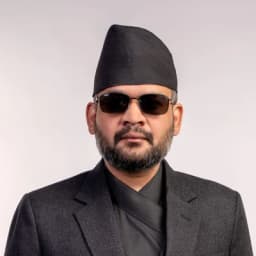
Prime Minister
Jhapa-5
68,348 votes
View Details →

Finance Minister
Tanahun-1
38,040 votes
View Details →

Minister for Home Affairs
Gorkha-1
29,896 votes
View Details →
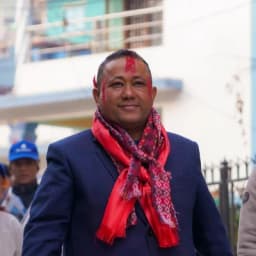
Minister for Foreign Affairs
Kathmandu-6
27,719 votes
View Details →
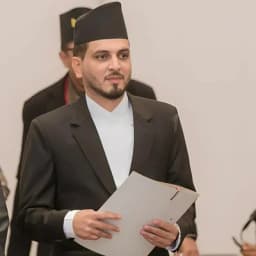
Minister for Physical Infrastructure and Transport
Rupandehi-1
54,845 votes
View Details →
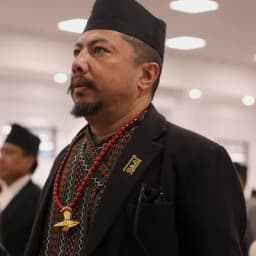
Minister for Energy, Water Resources and Irrigation
Kathmandu-8
24,592 votes
View Details →
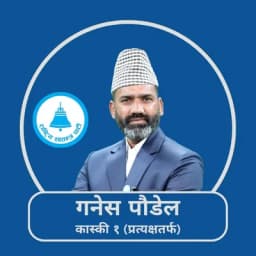
Minister for Culture, Tourism and Civil Aviation
Kaski-1
39,883 votes
View Details →
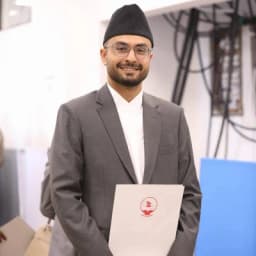
Minister for Education, Science and Technology; and Youth and Sports
Kathmandu-5
30,737 votes
View Details →
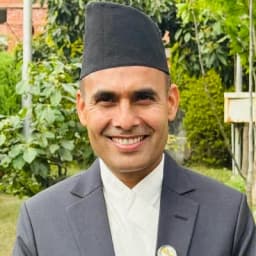
Minister for Communication and Information Technology
Nuwakot-1
22,609 votes
View Details →
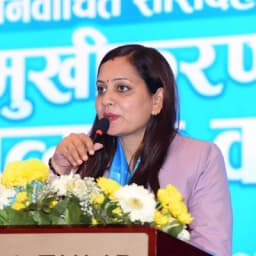
Minister for Health and Population; and Drinking Water
PR
View Details →

Minister for Land Management, Cooperatives and Poverty Alleviation; and Federal Affairs and General Administration
PR
View Details →
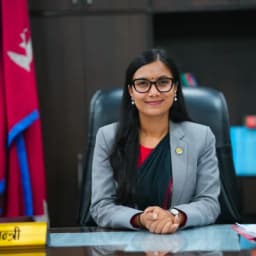
Minister for Law, Justice and Parliamentary Affairs
Chitwan-3
59,277 votes
View Details →

Minister for Agriculture and Livestock Development; and Forest and Environment
PR
View Details →

Minister for Labour, Employment and Social Security
Mahottari-2
32,722 votes
View Details →

Minister for Women, Children and Senior Citizen
PR
View Details →
Track progress across key sectors
Real-time status of government commitments
National digital ID and unified database for all Nepalis
Digital service delivery — end queues at government offices
No fraternal organizations — ban party-affiliated wings in state bodies
End party-based trade unions in civil service — professional administration
Autonomous transfer board — end politically motivated civil servant transfers
Constitutional reform debate paper within 3 months — directly elected executive
Strengthen CIAA, Judicial Council, and Constitutional Council
Complete transitional justice process
Merit-based judge appointments — end political quota system
Explore live broadcasting of court hearings
Digital governance — tippani.gov.np, paripatra.gov.np, digital signatures mandatory
Transform National Planning Commission into modern think-tank
Repeal ~24 outdated laws — improve doing business environment
Mission-mode project delivery — time-bound with accountability
Complete all national pride projects within 2 years
Return small depositors' savings within 100 days of forming government
Food security and nutrition as national priority — import substitution
Free schools from political activities — ban party politics in education
Human-wildlife conflict reduction — monkey control, elephant management
Chure conservation — scientific extraction, Integrated Chure Conservation Authority
Formal state apology to Dalit communities for historical discrimination
Implement judicial inquiry commission recommendations on Gen-Z movement
Investigate assets of public officials since 2046 BS — confiscate illegal wealth
Balanced foreign policy — Nepal as 'vibrant bridge' not 'buffer state'
Recent government activity and promise-related news